The Invisible Weight: What It Really Means to Care for Someone with a Chronic Illness
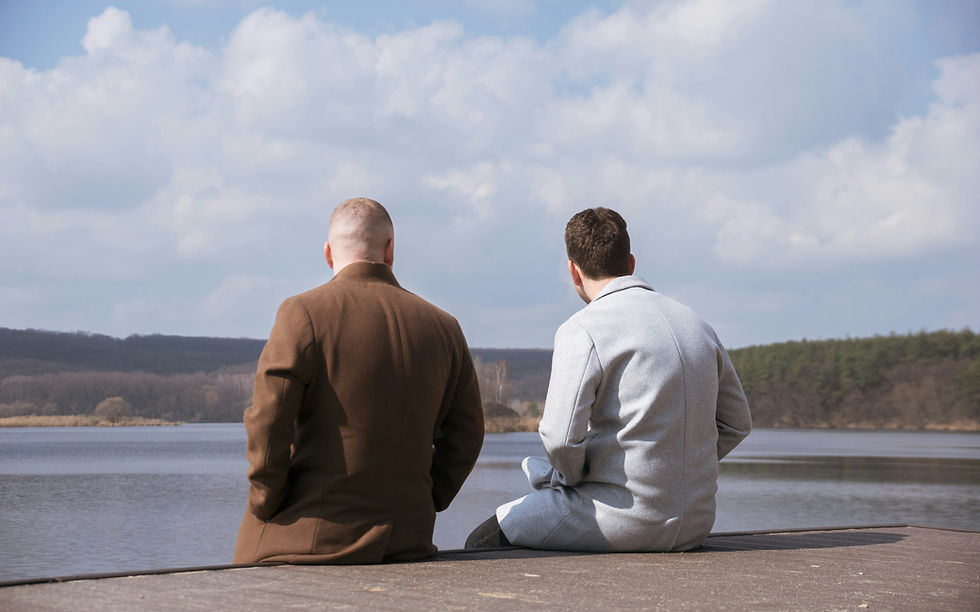
We talk a lot about living with chronic illness. We talk less about what it's like to love someone who
does.
Care partners, including the spouses, partners, parents, children, siblings, and friends who show up every day for someone navigating MS, Lupus, Parkinson's, Rheumatoid Arthritis, or another chronic condition, carry something that's hard to name. It's not just the logistics, though those are real. It's the emotional recalibration that happens quietly, constantly.
You learn to read a room. A face. An energy level. You become an expert in the person you love in ways you never expected to be, and that expertise comes at a cost that often goes unspoken.
I know this firsthand. I've been on both sides of this journey. Living with MS myself, and caring for family members with Parkinson's and Alzheimer's. What I learned from both experiences shapes everything I do as a health coach.
What Caregiving Actually Looks Like
There's a version of caregiving that shows up in awareness campaigns, the devoted partner, the tireless parent, the selfless friend. That version is real. But it leaves out the parts that are harder to talk about.
The exhaustion that doesn't go away with sleep. The grief of watching someone you love navigate something you can't fix. The identity shift that happens when your role changes from partner or parent to caregiver. The guilt, for needing rest, for feeling frustrated, for having needs at all.
Care partners often describe a constant low-level vigilance, always monitoring, always anticipating, always ready. That kind of sustained alertness is profoundly depleting. And yet most care partners resist calling it that. Because the person they're caring for is dealing with something so much harder. Right?
Here's what I want to say directly. Your experience is real. Your depletion is real. And it matters. Not just for you, but for the person you're caring for.
The Research Is Clear
Caregiver burnout is well-documented. Studies consistently show that care partners of people with chronic neurological and autoimmune conditions experience elevated rates of anxiety, depression, social isolation, and physical health decline. The demands of caregiving — emotional, logistical, financial, physical — take a measurable toll over time.
And yet care partner wellness is chronically underserved. Most support systems, medical appointments, and wellness resources are focused entirely on the person with the diagnosis. The care partner sits in the waiting room. Manages the medications. Coordinates the appointments. Goes home and figures out the rest alone.
This isn't a failure of individuals, it's a gap in the system. And it's one that health coaching can help fill.
What Changes When Care Partners Get Support
In my experience, both personal and professional, when care partners get genuine support, everything shifts. Not just for them. For the person they're caring for too.
When a care partner has space to be heard, to process what they're carrying, and to build sustainable habits around their own wellbeing they show up differently. Not because they weren't devoted before. But because they're no longer running on empty.
The work we do in coaching isn't about adding more to an already full plate. It's about:
• Creating space for the care partner's own goals, needs, and identity. Separate from their caregiving role
• Building practical strategies for managing energy, stress, and the emotional labor of caregiving
• Developing sustainable rhythms that work within the reality of their life. Not an idealized version of it
• Reconnecting with what restores them, not just what's required of them
You Are Not Just a Caregiver
One of the most important things I try to hold space for in coaching is this, you are a whole person. Not just a role.
You have your own health. Your own goals. Your own life that exists alongside, not in service of, the person you're caring for. That's not selfish. That's necessary.
The most effective care partners I've known are the ones who understand this. Who invest in their own wellbeing not as a luxury but as a foundation. Who recognize that sustainable care requires sustainable self-care. Not the spa-day version, but the real version. Sleep. Movement. Nutrition. Rest that actually restores. Space to feel what they feel without judgment.
That's what coaching supports. Not a protocol. A partnership. Built around you, your life, and what actually matters to you.
If This Is You
If you're reading this and recognizing yourself, the vigilance, the invisible weight, the guilt about having needs, I want you to know something.
You are not alone in this. And there is support available that is actually designed for you.
Whether you're caring for someone with MS, Lupus, Parkinson's, Rheumatoid Arthritis, Alzheimer's, or another chronic condition, your wellbeing matters. Not when things settle down. Not after the next appointment or the next flare or the next transition. Now.
Rooted Rise Health works with care partners as well as the people they support. Because the journey belongs to both of you.
About Joel Riciputi
Joel is an integrative health coach at Rooted Rise Health, working with people navigating MS, Lupus, Parkinson's, and other neurological and autoimmune conditions, along with their care partners. He lives with MS himself and brings both lived experience and evidence-based coaching to his work. Joel is a UC San Diego certified Health and Wellness coach.
Ready to talk?
A free 15-minute discovery call is a good place to start. No agenda, no pressure. Just a conversation about where you are and where you'd like to go.
You'll be directed to Vibly, a secure, HIPAA-compliant platform where all scheduling, messaging, and coaching sessions are managed. Your privacy is protected every step of the way


Comments